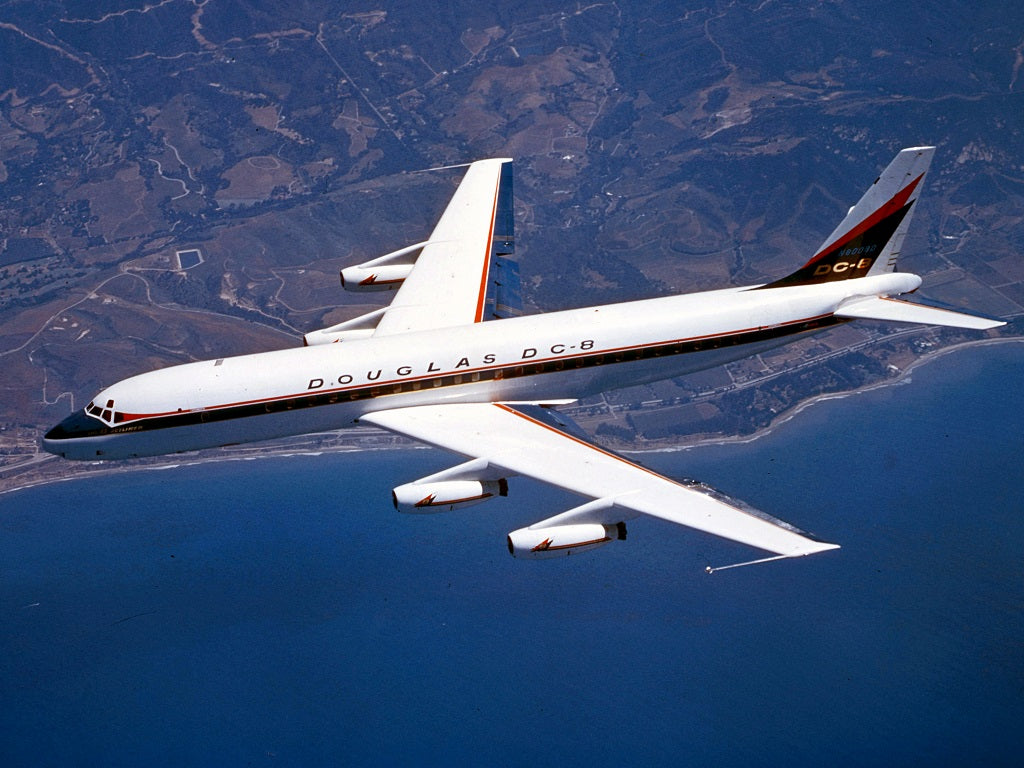
The History Behind the Douglas DC-8
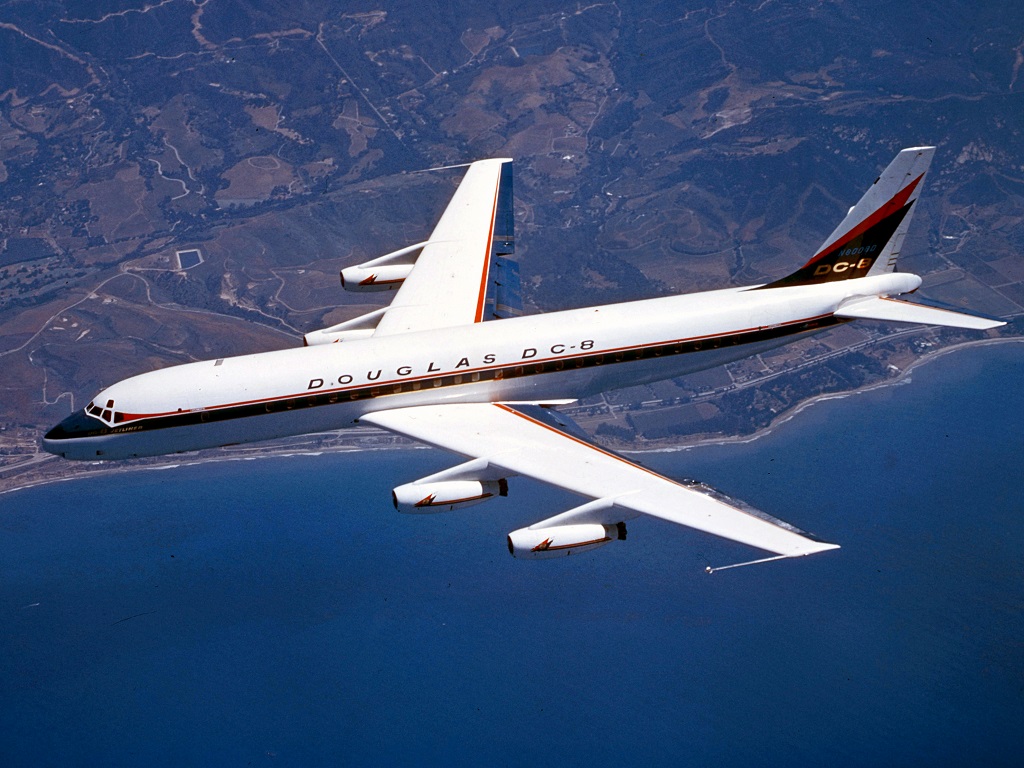
Above: The very first DC-8
The Douglas DC-8 is a long range, narrowbody aircraft created in the 1950s as a direct competitor to the Boeing 707, which was the most popular jet of its kind at that time.
How did the development of the DC-8 begin?
The DC-8 was originally designed to be an Aerial Refueling aircraft for the USAF, when it's development began in 1952. Unfortunately for Douglas, they lost the contract to Boeing with their KC-135 Stratotanker. After this loss, Douglas decided to officially commit $450 Million USD towards the development of the DC-8 civilian jet powered airliner in 1955.
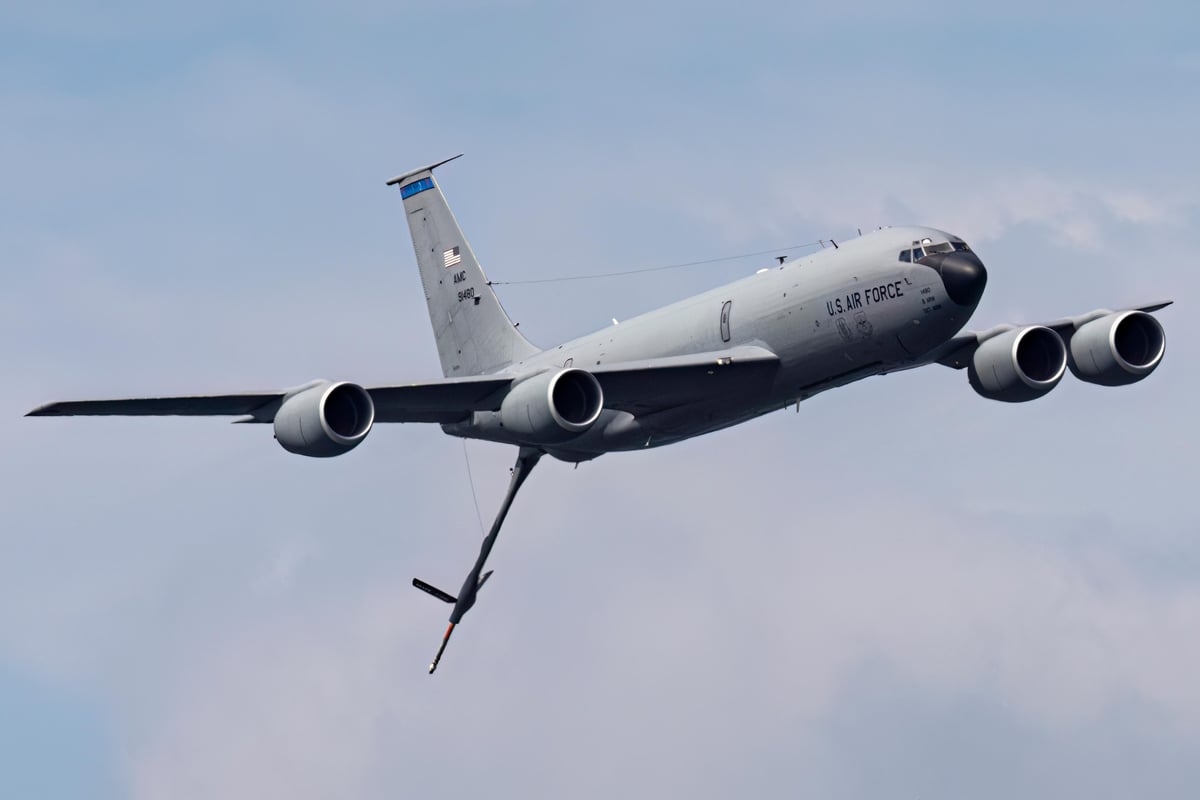
Above: Image of the Boeing KC-135
Rollout
On April 9th, 1958, the very first DC-8 was rolled out at the Long Beach Airport Build Plant.

Above: DC-8 Rollout at Long Beach, CA.
The aircraft had initial orders from many airlines, which included the following:
- Pan Am
- United Airlines
- Delta Airlines
- KLM Royal Dutch Airways
- Japan Airlines
- Scandinavian Airlines
- Eastern Airlines
- National Airlines
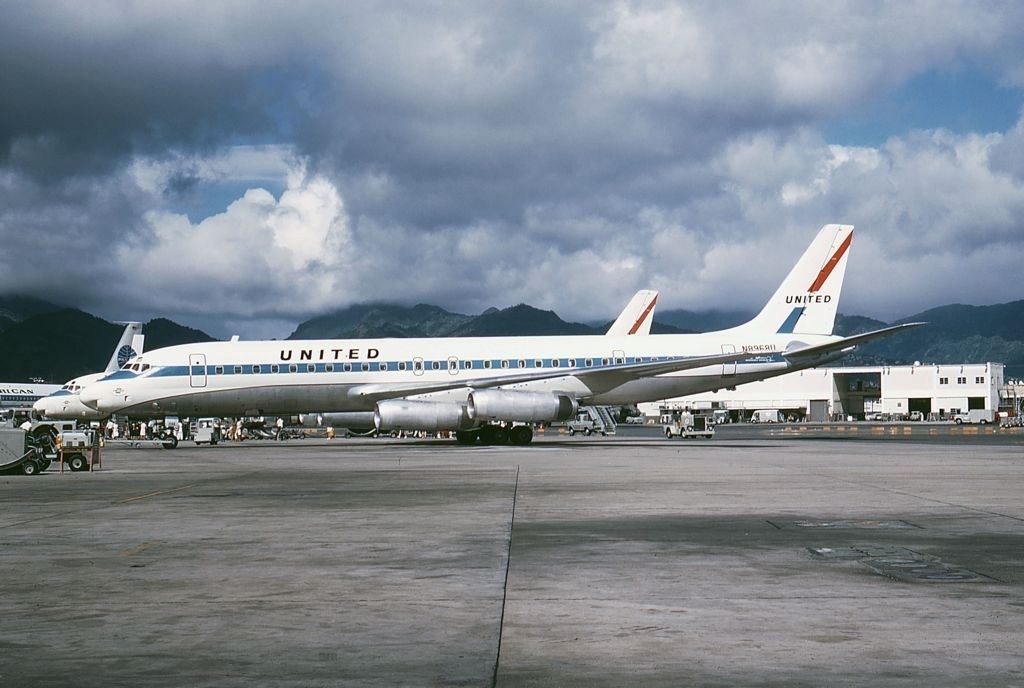
Out of all the initial customers, Pan Am was the first airline to place an order. Though they were first in this, United and Delta were the first to put the aircraft into service.

Above: Delta DC-8
Below: United DC-8
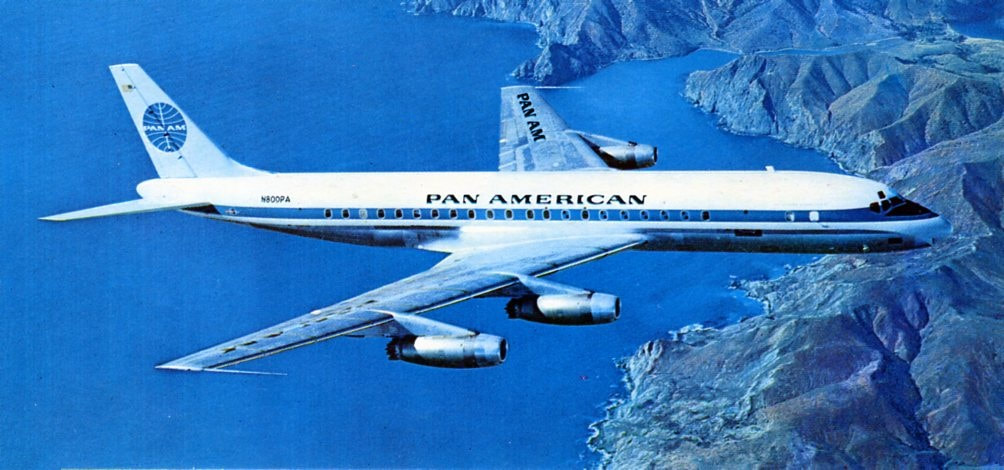
Above: Pan Am DC-8![]()
Entering Service
On September 18th, 1959 both United Airlines and Delta Airlines put the DC-8 into scheduled commercial service.
United's first route with the aircraft was from SFO to JFK, while Delta's first was from JFK to ATL.
The event of both airlines putting the aircraft into service on the same day was not a planned event, it just happened to be that both airlines were starting the flights of this plane that day.
This was a great step forward in the DC-8's success.
View photos in last section for examples of Delta and United's DC-8s.
Major Variants and Upgrades:
DC-8 Initial & Medium-Range Series (Short Fuselage):
The early models of the DC-8 had the original fuselage length and primarily used less powerful, less fuel-efficient turbojet engines (Series 10/20/30/40) or early turbofans (Series 50).
The length was 150ft and 6 inches.

Above: The initial DC-8 variant, being the first one made during its brief time with LH.
DC-8 "Super Sixties" Series (Stretched Fuselage):
The "Super Sixties" were a dramatic re-engineering of the aircraft, featuring major fuselage stretches and better engines to compete with the forthcoming Boeing 747.

Above: The DC-8 "Super Sixty" flying with SAS.
DC-8 "Super Seventies" Series (Re-Engined):
The Series 70 was a modification program, not a new-build, designed to meet strict new noise regulations introduced in the late 1970s and early 1980s.

Above: DC-8 Super 70 operating with Overseas National Airways (ONA)
Operational Fields:
The DC-8 was operated in many different fields, from passenger to scientific research usage.
The following is a list of some fields it was used in:
- Commercial (Passenger Service):
The aircraft was most commonly used as a passenger aircraft, as that's what it was designed for.
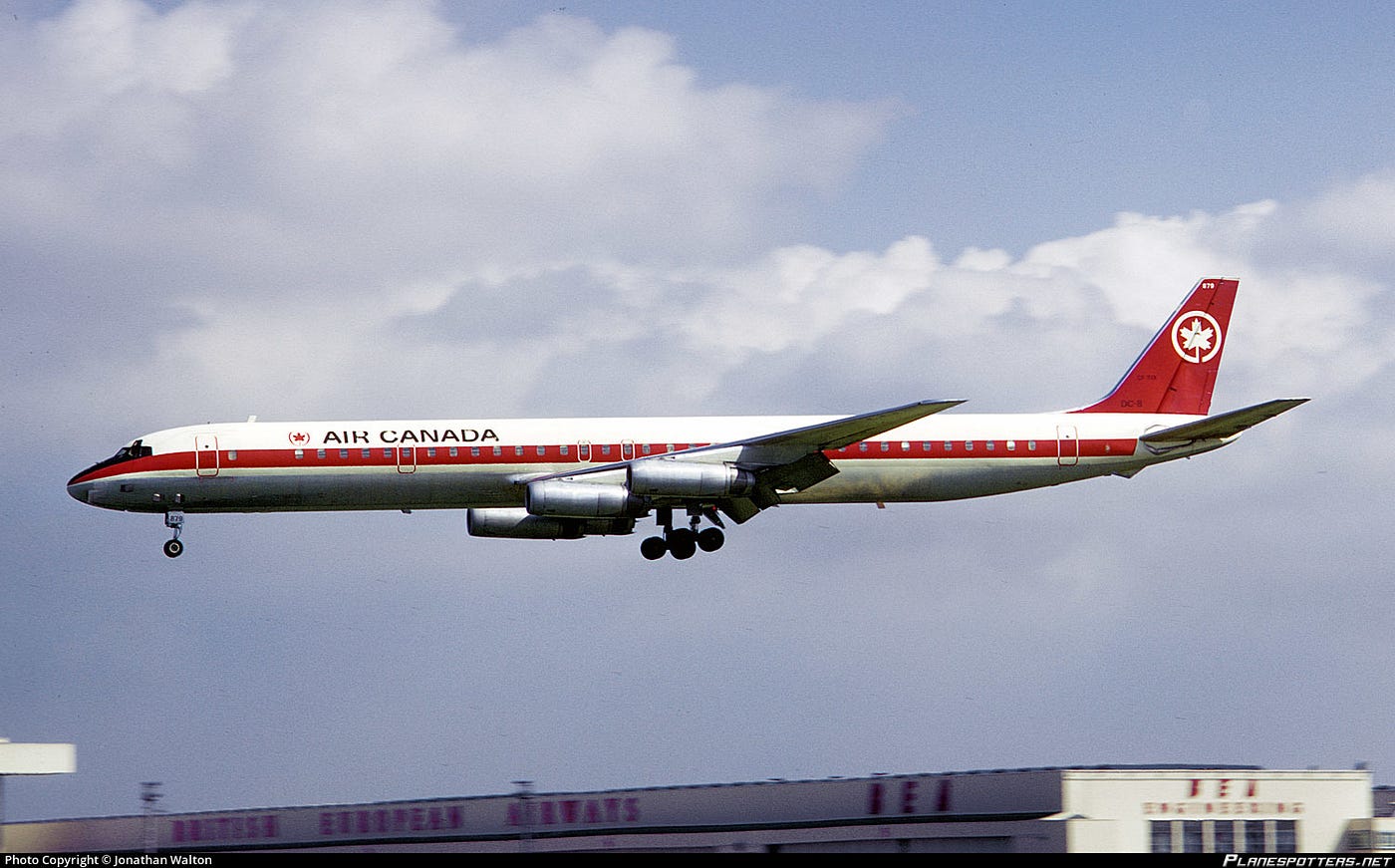
Above: Air Canada DC-8.
- Cargo/Freighter:
The DC-8 also served as a cargo aircraft. It was a very popular option, and was still used up until 2025.

Above: Quebecair Cargo DC-8 in the snow.
- Military:
Although the USAF contract was lost, the aircraft was still used as another variant as a training aircraft in the past.

Above: A USN DC-8, known as the EC-24A.
- Humanitarian Aid:
As mentioned in the Cargo section, a company known as "Samaritan's Purse" had been using the aircraft for that purpose.

Above: Samaritan's Purse DC-8, used until 2025 where it's being replaced by a Boeing 757 and a 767.
- Scientific Research Laboratory:
NASA used the aircraft as an Airborne research lab so they can do research which would further help in scientific developments.


Above: A couple photos from the Retirement of the NASA DC-8 Airborne Scientific Research Lab.
Crashes:
Over its total time in service, the DC-8 has had 139 incidents, this includes hull losses and other.
The End?
The DC-8's production was halted in 1972, after a total of 556 aircraft were produced. This occurred because the DC-8 fell victim to the DC-10, and other newer aircraft. Although production was stopped long ago, the aircraft was still kept in service up until 2025!
According to ATDB.aero, as of June 2025, there are still 3 operators of this aircraft around the world who fly it for Cargo purposes.
In the end, the DC-8 was a major success. It had popular presence around the world, from places like Canada to Japan, it was a beloved aircraft.
Did you like this story? And do you want some DC-8 models of your own now?
Go check out Prairie Diecast, where get many different DC-8 models in stock!
If you order, use code "PRAIRIEDIECAST" and receive 10% off on your order!

Leave a comment
All comments are moderated before being published.
This site is protected by hCaptcha and the hCaptcha Privacy Policy and Terms of Service apply.